My Mother-in-law, Agripina, turned 81 years young today. A big party in her honor will be held Wednesday. This was a little cake we had for her at home today.

Here to amuse, never abuse. It's a blog-o-entertainment.
Saturday, June 23, 2007


Death Of A Legend: Sausage King Bob Evans Dies At 89.
COLUMBUS, Ohio - Bob Evans, whose quest for quality sausage to serve the truckers who filled his 12-stool, 24-hour-a-day steakhouse in southeast Ohio led to the creation of a restaurant chain that bears his name, died Thursday, Bob Evans Farms Inc. announced. He was 89.
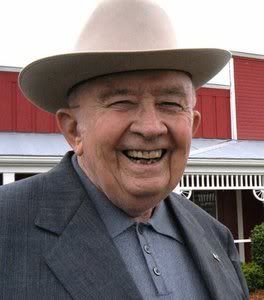
Evans died at the Cleveland Clinic, Evans' family told the company. The clinic said he died of complications from pneumonia.
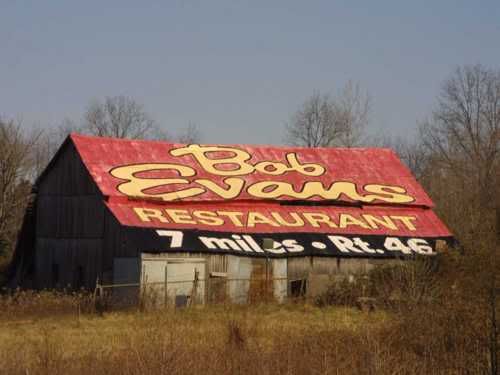
Evans complained that he could not get good sausage for the restaurant he started after World War II in Gallipolis in southeast Ohio.
Starting with $1,000, a couple of hogs, 40 pounds of black pepper, 50 pounds of sage and other secret ingredients, he opted to make his own, relying on the hog's best parts as opposed to the scraps commonly used in sausage. He began selling it at the restaurant and mom-and-pop stores, and peddled tubs of it out of the back of his pickup truck.
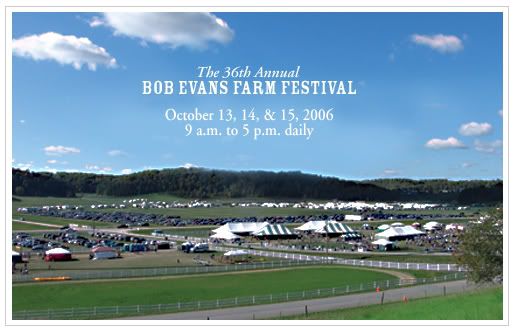
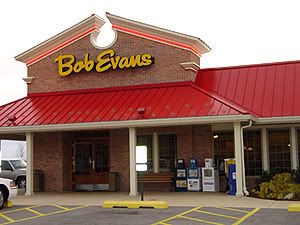
It marked the beginning of what is now a restaurant chain with sales of $1.6 billion in the fiscal year ended April 28 with 590 restaurants in 18 states. The company also operates 108 Mimi's Cafe casual restaurants in 19 states, mostly in the West. Its sausage and other products are sold in grocery stores.
"You might say the truck drivers did my research for me," he said. "They would tell me that this was the best sausage they ever had, and then buy 10-pound tubs to take home."
Evans formed Bob Evans Farms in 1953 with five friends and relatives. The chain emphasizes farm-fresh food, cleanliness and service in a homey atmosphere.
The red brick restaurants have white trim and the yellow "Bob Evans" name, reflecting Evans' handwriting, at the top of the building.
The original Bob Evans restaurant opened in 1962 at the farm near Gallipolis, about 80 miles southeast of Columbus, to serve the growing number of visitors who stopped by. The restaurant, called The Sausage Shop at first, started with 12 stools.
"People like to deal with farmers. They like to buy stuff from the farm. They think it's fresher," Evans said in a 2003 interview. "In their mind, it's better and they're willing to pay more for it."
Evans and his family appeared in the company's early advertising, with Evans frequently wearing a Stetson and a string tie.
"Bob is a creative guy, an idea man, a quality control specialist. That was really the role he played," said Stewart Owens, former chief executive of the company, which moved to Columbus in 1968.
"Bob Evans is an icon of southern Ohio," said Chris Boring, president of Boulevard Strategies, a Columbus-based company that follows the retail industry. "Family values are reflected at every aspect of the operation, from the menu to the decorations."
Evans did clash with the company after his retirement as president Dec. 31, 1986.
In the 2003 interview, he criticized the company over its failed Mexican concept restaurant in the 1990s , "That was a disaster" , and some acquisitions he says he wasn't consulted about.
In 2001, Evans came out in favor of a proposal to sell the company to beef up the stock price. Two years later, he was happier as the company's performance was more focused and the stock price had rebounded.
"They're doing a pretty good job," he said then. "They got rid of all those dogs."
Anyone who bought 1,000 shares of Bob Evans when the company went public in 1963 at $9 per share would have shares worth more than $2 million today.
Evans is survived by his wife, Jewell, and five of his six children.
This is a video I made last year from a Bob Evans Restaurant
Thursday, June 21, 2007
My Favorite Comedy Team On Uncle Albert's TV Show
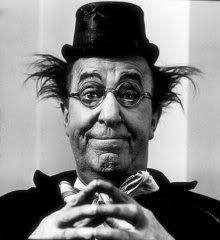
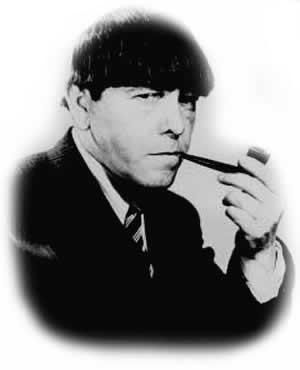
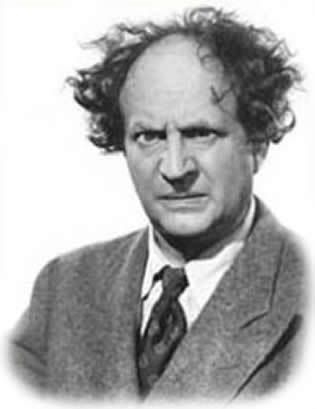
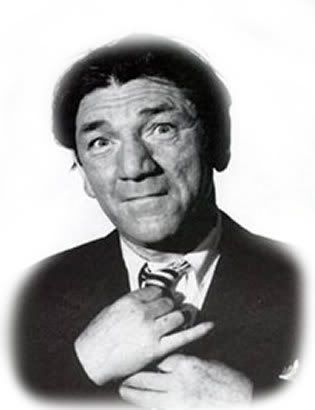
From 1950 comes the Camel Comedy Caravan with special guests, The Three Stooges (Larry, Moe, and Shemp). The host of this show was Ed Wynn,
probably most notable as Uncle Albert in Disney's Mary Poppins.
He loved to laugh, and now you can laugh right along with him. The show was hosted by Camel cigarettes and you will see plenty of advertising for them in this show.
Nostalgic, historic, and entertaining.
Overall, it's pretty funny, but I can't believe how cheesy tv sets were back then.
Wednesday, June 20, 2007
My Favorite Detective Show From The 60's.
Mannix (1967-75)
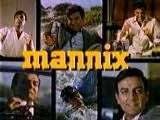
One of the most violent detective series in TV history, "Mannix" tells the weekly adventures of private eye Joe Mannix,
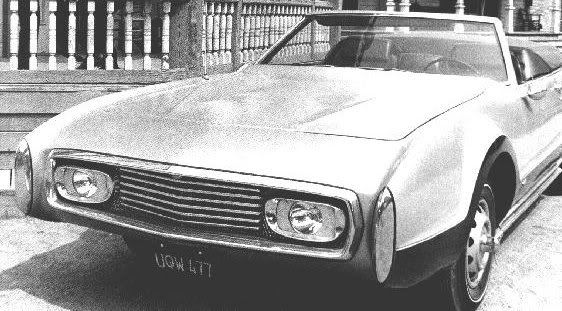
who originally worked for a high-concept computerized firm known as Intertect, but later opened his own agency at 17 Paseo Verde, Los Angeles, California. Peggy Fair was his black secretary, who was frequently kidnapped. Lots of shootings, car chases, fights, and crashes.
JOE MANNIX is "a hard-boiled private eye, in the classical tradition." Formerly the pride of Intertect, a high-tech detective firm, Joe left to start his own detective agency where he relied less on sophisticated gadgetry and more on his own wits and a wicked right hook. This Korean War veteran is remarkably even-tempered and seems to take fist fights, high-speed car chases and bullet wounds in stride. Although his rugged good looks, snazzy convertible-with a car phone!- and dizzying array of loud sports jackets attract an endless stream of beautiful women, he seems intent on remaining a bachelor. The one woman who's a constant prescence in his life is his ever-faithful secretary, Peggy Fair. But she didn't come along until the second season.
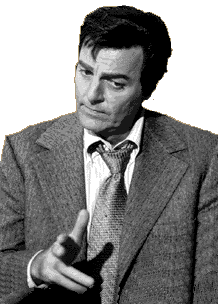
To tell the truth, it was the first season that really shined. Originally Joe was a hotshot op for Intertect, a high-tech, ultra-modern Pinkerton-like high-tech detective agency headed by Lew Wickersham. Where Lew was a white-collar, straight company man, Mannix was a rough-and-tumble loner with his heart on his sleeve and a loaded gat. The tension between the two gave the show an edge most PI shows could only dream of, as Wickersham rattled on and on about databases, company reputations and computer analysis, while Mannix's M.O. seemed to consist
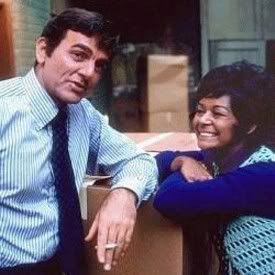
solely of hunches, fistfights, and an occasional gun battle. In You Can Get Killed Out There, an episode near the end of the first season, Joe and Lew's differences boil over and Joe leaves Intertect rather than accept an assignment. The following episode, Another Final Exit had Joe cutting all ties with Intertect. And yet, nobody seems to remember the first season.
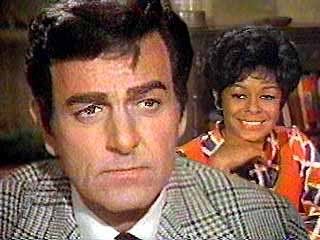
By the second episode of the second season, The Silent Cry, the Mannix most of us remember was firmly in place. The one-man agency wit Gail Fisher in her regular role as faithful secretary Peggy Fair, the widow of a police officer killed in the line of duty, and the mother of one son, Toby. One of the first blacks to be cast in an American drama, Peggy made quite an impression. In a recent chat online, several folks were convinced that in fact, Joe and Peggy were "doing it", and that CBS didn't reveal the relationship due to the "racial sensitivities" of the time. Whatever. There was certainly affection there, and Peggy was an integral part of the agency, running background checks, brainstorming with Joe and rescuing Joe from the local jail or hospital. And she could be counted on to be threatened or kidnapped once or twice a season, just to keep things rolling. Source: Thrilling Detective.com.
What I remember most about watching this show is that is was always past my bedtime on a schoolnight, so I would have to sneak and peek out of the bedroom door in order to watch it. I loved this show! I actually have the theme song as one of my ringtones.
Tuesday, June 19, 2007
My Favorite John Wayne Movie.
True Grit (1969)
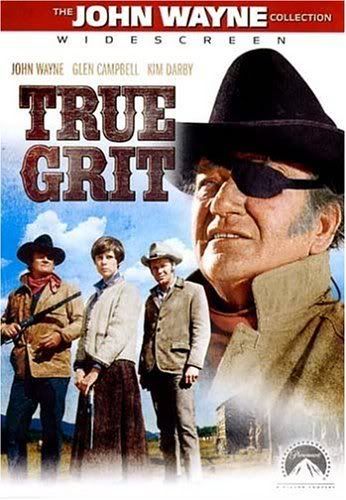
The sudden death of her father sends a young tomboy of a girl, 'Mattie Ross'
(Kim Darby) on a mission to find justice, and the avenging of her father's death.
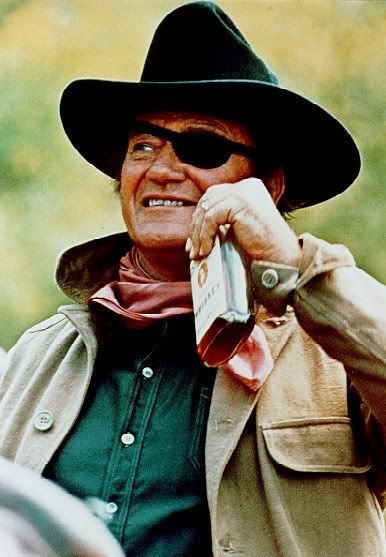
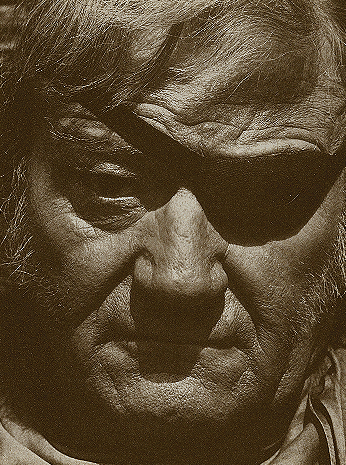
She recruits a tough old marshal in the person of Rooster Cogburn (John Wayne), because he has "grit", and a reputation of getting the job done.
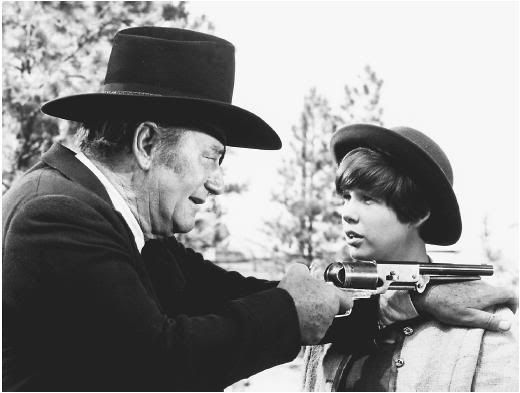
Mattie accompanies Cogburn, and also a Texas Ranger ('La Boeuf' played by Glen Campell; who is looking for 'Tom Chaney' [Jeff Corey]
for a separate murder in Texas) as the leave from Fort Smith, Arkansas into the Indian Territory (present day Oklahoma) to find her father's killer.
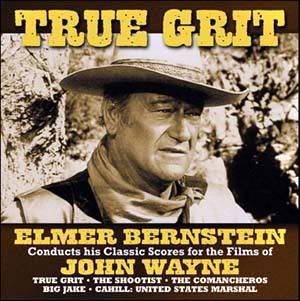
I like this last video as it shows the areas used for the filming of "True Grit", both then and now.
My Favorite James Coburn Movie
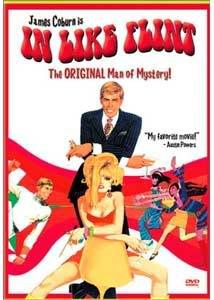
In Like Flint (1967)
"In Like Flint, that's my favorite movie!"
- Austin Powers
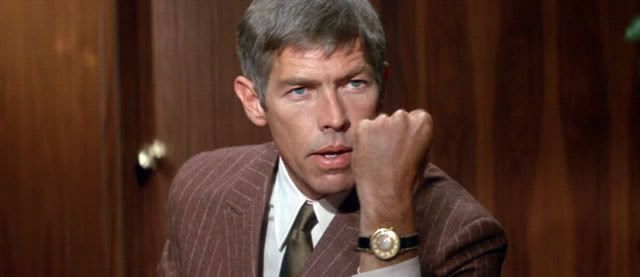
Flint is again called out of retirement when his old boss finds that he seems to have missed 90 seconds while golfing with the president. Flint finds that the president has been replaced by an actor (Flint's line [with a wistful look] is "An Actor as President?")
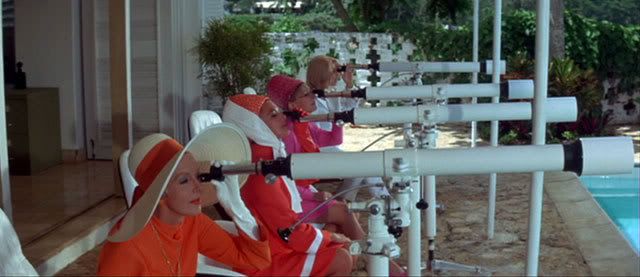
Flint finds that a group of women have banded together to take over the world
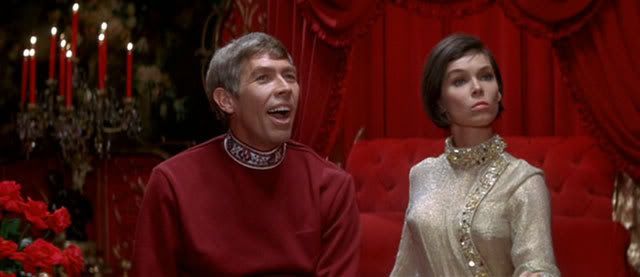
through subliminal brainwashing in beauty salons they own.
This is a scene from "In Like Flint".
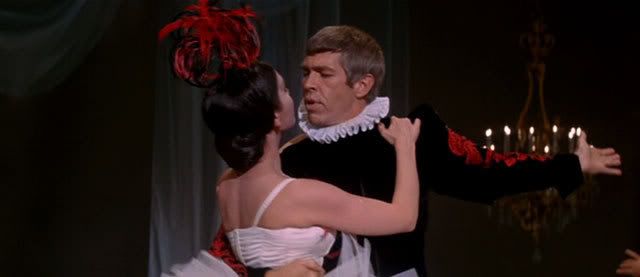
Although this movie, and it's original, "Our Man Flint", were spoofs of the James Bond films, when I was young I thought they were the best spy movies ever made. And, to this day, I still do.
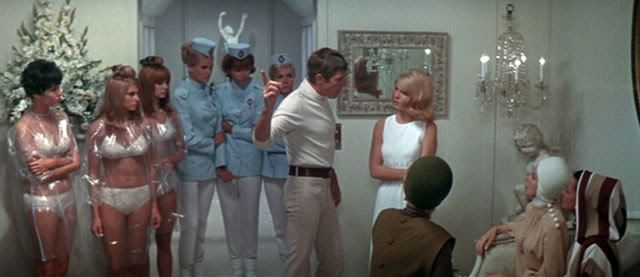
This last video is from "Our Man Flint".
Subscribe to:
Posts (Atom)
LinkWithin

Get The Official Blog-o-Rama Widget!
Keep up with all the latest info on the blog-o-rama by posting this to your blog or my space page. You can also scroll this widget to go directly to the latest article that you are interested in. Give it a try!
 Keep up with all the latest info on the blog-o-rama by posting this to your blog or my space page. You can also scroll this widget to go directly to the latest article that you are interested in. Give it a try!